Cancer patients from minority ethnic backgrounds are less likely to survive following a donor stem cell transplant than White patients, according to research published in Lancet Haematology.
Conducted by stem cell charity Anthony Nolan and the British Society of Blood and Marrow Transplantation and Cellular Therapy, the study is the largest to date on the impact of ethnicity on stem cell transplant outcomes in the UK.
A stem cell transplant is a potentially lifesaving treatment for thousands of patients each year with blood cancer or a blood disorder. It involves replacing a patient’s unhealthy blood stem cells with new cells from either the patient or a genetically matched donor.
The research looked at over 30,000 patients who had a stem cell transplant between 2009 and 2020 in the NHS, including 19,000 cancer patients.
It accounted for factors including age, disease type, transplant type and level of donor matching. Patients had previously identified whether their ethnicity was Asian, Black, White or Other (patients of more than one ethnicity or any other declared ethnicity).
Ethnicity was found to have a significant impact on patients who received a transplant using donor cells, with no impact of ethnicity seen for patients who had a transplant using their own cells.
Cancer patients from all minority ethnic backgrounds were found to have an increased risk of fatal complications following a donor transplant compared to White patients.
There was a higher risk of death 100 days after donor transplant for Black, Asian and Other patients compared to White patients. This increased risk continued until five years after transplant.
Compared with White patients, Black and Asian patients had lower survival after treatment, with both groups of adult patients 1.5 times more likely to die within five years after donor transplant compared to White patients.
The most pronounced differences were in children with cancer. Asian children had a 32 per cent risk of death within five years of a donor transplant compared with a 15 per cent risk in White patients.
Likelihood of fatal complications in cancer patients 5-years after transplant
| All patients | Adult patients | Paediatric patients | |
| White | 29% | 30% | 15% |
| Black | 37% | 39% | 16% |
| Asian | 38% | 39% | 32% |
| Other | 32% | 30% | 15% |
The results reinforce research in other countries like the US which indicate patients from minority ethnic backgrounds have worse outcomes from stem cell transplants using donor cells.1
Due to limited data the research was not able to look at the causes of the disparities between minority ethnic and White patients, and the study authors say more research is needed to understand this.
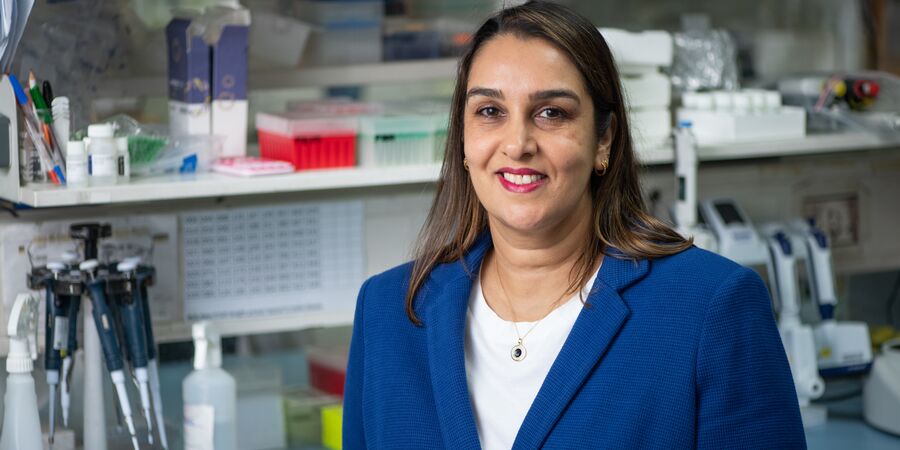
Dr Neema Mayor (pictured), director of immunogenetics and research services at Anthony Nolan and lead author of the study said: “Despite stem cell transplants having been used as a treatment for blood cancer and blood disorders for over 50 years, until now there was little known about the health inequalities experienced by patients in the UK.
“Our research shows for the first time that ethnicity affects survival following a stem cell transplant, with Asian and Black patients the most likely to die after transplant.
“While our analysis cannot explain why we see this difference between people of different ethnicities, we know there are likely to be complex genetic, socioeconomic and systemic factors which intersect with ethnicity to affect patients’ outcomes.
“Our research is actively investigating the impact of many of these factors, so we can continue to work to ensure all patients have equal access to, experience of and outcomes from a stem cell transplant.”
Caitlin Farrow, director of strategy and influencing at Anthony Nolan said: “A stem cell transplant is a last-chance treatment for thousands of patients each year with blood cancer or a blood disorder, and it’s shocking to see the stark disparity in outcomes for patients from Black, Asian and other minority ethnic groups.
“Understanding the scale of the issue is the first step to drive change. Now, it’s essential that charities, healthcare providers and government alike act on these findings by investing in research to unpick and address the causes of disparities in stem cell transplants.”
Zara Kundra, 11, from Basingstoke, was diagnosed with acute myeloid leukaemia in 2019. She underwent a stem cell transplant from cord blood in June 2022 but suffered from Graft Versus Host Disease (GvHD) following the procedure. Her mother, Taruna, said: “It’s difficult to hear that patients like my daughter are less likely to respond well to a stem cell transplant because of their ethnicity.
“We come from Indian origin, and unfortunately, Zara didn’t have the best donor-match in the world. It meant she had a lot of complications afterwards.
“Zara is doing well now and has returned to a mostly normal life. But it’s vital more research is carried out in this area so that more children like her have the best chance when undergoing life-changing treatment.”
Professor John Snowden from the British Society of Blood and Marrow Transplantation and Cellular Therapy said: “Dr Mayor and colleagues have provided very important observations in their careful analysis of retrospective national registry data.
“The study has identified significant health inequalities that require further investigation, explanation and ultimately correction so that the same chances of life-saving transplant treatment can be offered to all patients irrespective of ethnicity and heritage.”
The researchers noted one explanation for the disparities could be that genetic differences between ethnicities affect how well patients respond to drugs used before and after a stem cell transplant.
Patients from minority ethnic backgrounds are also more likely to have a rare or unique tissue type which can make it harder to find a genetically matched donor on the stem cell register 2 This may result in patients waiting longer for a transplant which can increase the risk of infection or their condition worsening.
Although the study accounted for the level of matching between patients and their stem cell donors, the researchers highlighted differences in survival might reflect different levels of genetic diversity between ethnic groups which affects matching in ways that aren’t yet fully understood.
Anthony Nolan is researching alternatives to fully-genetically matched donors, like using stem cells from umbilical cord blood which can withstand a lower degree of matching, to help ensure all patients have the best chance of a successful transplant.
The charity campaigns for the recruitment of people from minority ethnic backgrounds to the donor stem cell register to increase the chances of everyone receiving a lifesaving match.
Last month, Anthony Nolan announced its collaboration with the Indian stem cell register, DATRI, to support the recruitment of stem cell donors in India. The project aims to increase the diversity of the global pool of donors to help find more matches for Asian patients in the UK, India and beyond.
Beyond genetic factors, the study authors highlighted there may be demographic characteristics that contribute to health inequalities in stem cell transplant. For example, socioeconomic factors like household income have been suggested to affect outcomes and experiences of stem cell transplant.3
The SEQoL study, led by Anthony Nolan, is the UK’s largest study aiming to understand the impact of a stem cell transplant on quality of life, and how this may be influenced by socioeconomic factors like education, income and housing. The charity says the results of this study and future research should be used to inform policies to address health inequalities.
The charity has also highlighted that research in other areas of healthcare show minority ethnic groups have different health outcomes and experiences in the UK due to complex, intersectional factors and unconscious bias in the healthcare system.4 It is not known how these factors specifically impact stem cell transplant patients, and more research is needed to understand and close the gap on ethnic inequalities in health and care.
Anthony Nolan is calling for immediate action to fund further research to better understand and address the causes of inequities so all patients can survive and thrive after a transplant.
Donate to support Anthony Nolan’s research to reduce health inequalities in stem cell transplant: anthonynolan.org.
LINK TO PAPER: https://www.thelancet.com/journals/lanhae/article/PIIS2352-3026(24)00312-0/fulltext
REFERENCES
- Baker KS, Davies SM, Majhail NS, et al. Race and socioeconomic status influence outcomes of unrelated donor hematopoietic cell transplantation. Biol Blood Marrow Transplant 2009; 15(12): 1543-54.
- Leen et al., 2020, The HLA diversity of the Anthony Nolan register, HLA Immune Response Genetics, https://doi.org/10.1111/tan.14127
- Baker KS, Davies SM, Majhail NS, Hassebroek A, Klein JP, Ballen KK, et al. Race and socioeconomic status influence outcomes of unrelated donor hematopoietic cell transplantation. Biol Blood Marrow Transplant. 2009;15(12):1543-54.
- NHS Race and Health Observatory, Driving Race Equity in Health and Care Strategy 2021-2024, available at https://www.nhsrho.org/wp-content/uploads/2023/05/NHS-RHO-Strategy.pdf, accessed April 2024.