An artificial intelligence (AI)-based model developed by UT Southwestern Medical Center researchers in the US can accurately predict which kidney cancer patients will benefit from anti-angiogenic therapy, a class of treatments that’s only effective in some cases.
Their findings, published in Nature Communications, could lead to viable ways to use AI to guide treatment decisions for this and other types of cancer.
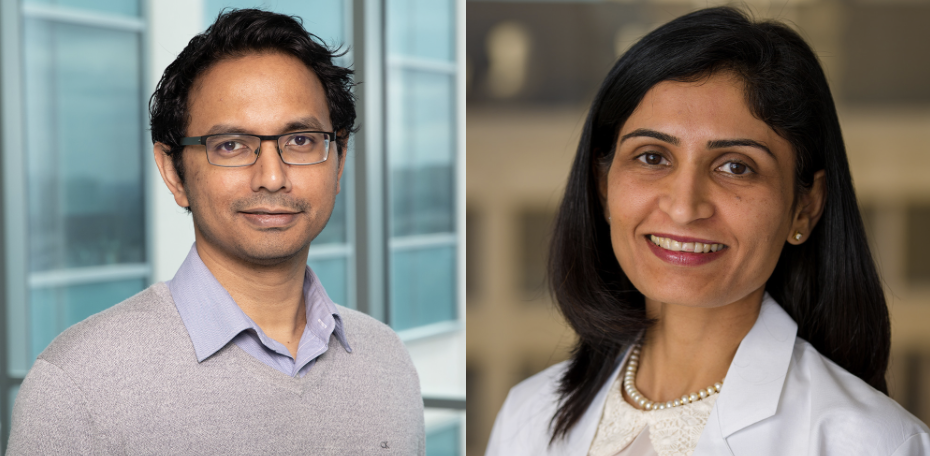
“There’s a real unmet need in the clinic to predict who will respond to certain therapies. Our work demonstrates that histopathological slides, a readily available resource, can be mined to produce state-of-the-art biomarkers that provide insight on which treatments might benefit which patients,” said Satwik Rajaram, Ph.D., Assistant Professor in the Lyda Hill Department of Bioinformatics and member of the Harold C. Simmons Comprehensive Cancer Center at UT Southwestern. Dr. Rajaram co-led the study with Payal Kapur, M.D., Professor of Pathology and Urology and a co-leader of the Kidney Cancer Program (KCP) at the Simmons Cancer Center.
Every year, nearly 435,000 people are diagnosed with clear cell renal cell carcinoma (ccRCC), making it the most common subtype of kidney cancer. When the disease metastasizes, anti-angiogenic therapies are often used for treatment. These drugs inhibit new blood vessels from forming in tumours, limiting access to molecules that fuel tumour growth. Although anti-angiogenic drugs are widely prescribed, fewer than 50 per cent of patients benefit from them, Dr Kapur explained, exposing many to unnecessary toxicity and financial burden.
No biomarkers are clinically available to accurately assess which patients are most likely to respond to anti-angiogenic drugs, she added, although a clinical trial conducted by Genentech suggested that the Angioscore (a test that assesses the expression of six blood vessel-associated genes) may have promise. However, this genetic test is expensive, is hard to standardise among clinics, and introduces delays in treatment. It also tests a limited part of the tumour, and ccRCC is quite heterogenous, with variable gene expression in different regions of the cancer.
To overcome these challenges, Drs Kapur and Rajaram and their colleagues at the KCP developed a predictive method using AI to assess histopathological slides – thinly cut tumour tissue sections stained to highlight cellular features. These slides are nearly always part of a patient’s standard workup at diagnosis, and their images are increasingly available in electronic health records, said Dr Rajaram, also Assistant Professor in the Center for Alzheimer’s and Neurodegenerative Diseases and the Department of Pathology.
Using a type of AI based on deep learning, the researchers “trained” an algorithm using two sets of data: one that matched ccRCC histopathological slides with their corresponding Angioscore, and another that matched slides with a test they developed that assesses blood vessels in the tumour sections.
Importantly, unlike many deep learning algorithms that don’t offer insight into their results, this approach is designed to be visually interpretable. Rather than producing a single number and directly predicting response, it generates a visualisation of the predicted blood vessels that correlates tightly with the RNA-based Angioscore. Patients with more blood vessels are more likely to respond to therapy; this approach allows users to understand how the model reached its conclusions.
When the researchers evaluated this approach using slides from more than 200 patients who weren’t part of the training data – including those collected during the clinical trial that showed the potential value of Angioscore – it predicted which patients were most likely to respond to anti-angiogenic therapies nearly as well as Angioscore. The algorithm showed a responder will have a higher score than a non-responder 73 per cent of the time compared to 75 per cent with Angioscore.
The study authors suggest AI analysis of histopathological slides could eventually be used to help guide diagnostic, prognostic, and therapeutic decisions for a variety of conditions. They plan to develop a similar algorithm to predict which patients with ccRCC will respond to immunotherapy, another class of treatments that only some patients respond to.
Other UTSW researchers who contributed to this study include first author Jay Jasti, Ph.D., former Data Scientist in the Rajaram Lab; James Brugarolas, M.D., Ph.D., Professor of Internal Medicine, Director of the Kidney Cancer Program, and a member of the Simmons Cancer Center; Dinesh Rakheja, M.D., Professor of Pathology and Pediatrics; Hua Zhong, Ph.D., Computational Biologist; Vandana Panwar, M.D., Medical Resident; Vipul Jarmale, M.S., Data Scientist; Jeffrey Miyata, B.S., Histology Technician; and Alana Christie, M.S., Biostatistical Consultant.
Dr Kapur holds the Jan and Bob Pickens Distinguished Professorship in Medical Science, in Memory of Jerry Knight Rymer and Annette Brannon Rymer and Mr and Mrs W.L. Pickens.
The study was funded by the Department of Defense (KC200285), the Cancer Prevention and Research Institute of Texas (RP220294), the Lyda Hill Department of Bioinformatics, a National Institutes of Health-sponsored Kidney Cancer SPORE grant (P50CA196516), and a National Cancer Institute (NCI) Cancer Center Support Grant (P30CA142543).