For the first time in the UK, a team of researchers at The Royal Marsden NHS Foundation Trust treating sarcoma have looked at how, using robotic guidance, multiple biopsies can be taken across different parts of a single tumour and analysed whilst still in the human body.
By using this technique, it was hoped that researchers would be able to better understand differences across cancer cells in different parts of the sarcoma, predict growth and gather more vital information about a particular tumour before any treatment is offered to a patient.
Eventually, it is hoped that knowing how a tumour will grow will help to inform clinicians about what type of treatment will work best for an individual patient.
As part of the study, funded by The Royal College of Radiologists and The Royal Marsden Cancer Charity, patients with suspected retroperitoneal and pelvic sarcomas (RPS) – a rare type of soft tissue tumour –underwent an MRI a week or less before the biopsies. This was so that images of the tumour could be compared to the analysis from the biopsies.
Three ‘target regions’ in one tumour, with differing imaging characteristics, were then sampled for analysis. By sampling three distinct regions, clinicians saw a more comprehensive and accurate representation of tumour biology compared to conventional single-site biopsy.
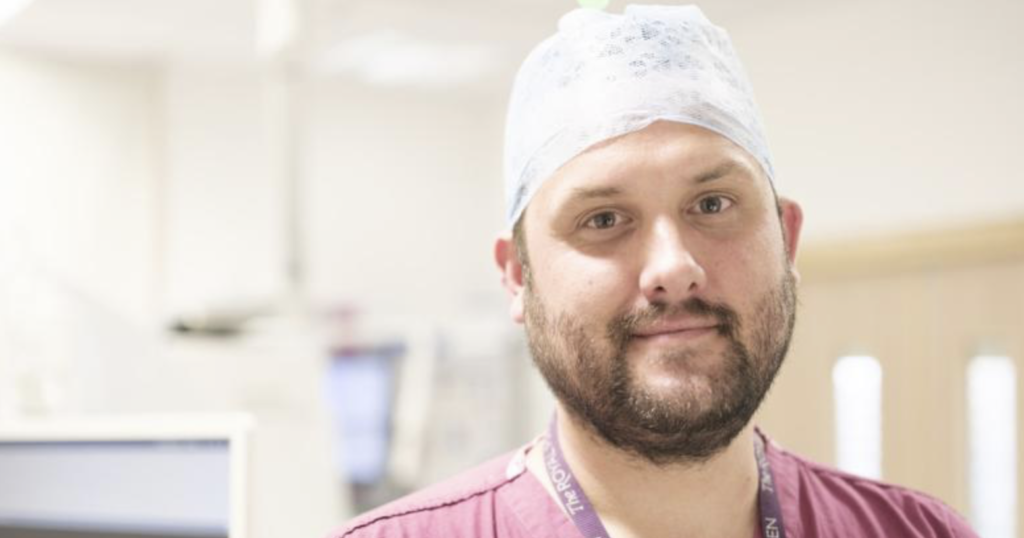
Dr Edward Johnston (pictured), Academic Consultant in Oncological Interventional Radiology and Chief Investigator of the study said: “This is the first time that researchers in the UK have attempted to understand the complexities of multiple tumour sites as seen on MRI before they are surgically removed.
“Not all parts of a singular tumour behave in the same way and knowing this before treating a patient will help us to make clearer, more informed decisions about patient care.”
It was already known that there were differences across the make-up of cancers prior to this study – known as intra tumoral heterogeneity – through post-surgical analysis of growths. This study was designed to build on this understanding using advanced imaging and biopsy at multiple tumour sites prior to surgical removal.
With further work, it is hoped that this information will lead to a very detailed understanding of how tumours appear on imaging.
In the future, this information could be fed into an AI algorithm to classify tumours and forgo the need for tissue biopsy in many patients, with AI instead being able to predict tumour growth.
This study was supported by The Royal Marsden Cancer Charity. Through its funding the Charity supports the hospital’s ambitious research programme, helping to develop new and improved ways of diagnosing and treating cancer for the benefit of patients globally.