The first person has been enrolled in a new clinical trial taking place in the UK and the US, offering a specific group of up to 60 children with cancer access to a personalised investigational therapy that harnesses the immune system to attack tumours.
Set to explore whether CAR T-cell immunotherapy could be effective as a treatment for children and young people with difficult-to-treat solid tumours, the new trial includes participants up to early adulthood, with the first patient in their early 20s.
The trial is being led by a pioneering team of international experts, brought together by Cancer Grand Challenges – a global research initiative founded by Cancer Research UK and the National Cancer Institute in the US to tackle the biggest challenges in cancer. This is the first clinical trial funded by Cancer Grand Challenges.
Led by the Cancer Grand challenges NexTGen team and headed up by Dr Karin Straathof at University College London (UCL) the UK arm of the trial – MIGHTY – will recruit patients from University College London Hospital (ULCH) and Great Ormond Street Hospital (GOSH), with Professor Sandra Strauss leading recruitment for teenagers and young adults at UCLH.
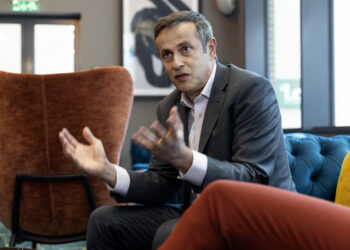
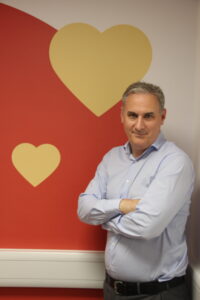
Dr Karin Straathof (pictured), Associate Professor in Tumour Immuno-Oncology at UCL, member of the NexTGen team and Lead Investigator for the MIGHTY trial, said: “Cancers in children and young people are fundamentally different from those in adults. They are unique in how they develop, how they resist treatment, and where their vulnerabilities lie. So, the treatments should be different too.
“While current chemotherapy-based treatments work well for some patients, in other patients the tumour does not respond or comes back.
“We urgently need new treatments that kill cancer cells without harming healthy ones — T-cell immunotherapy has the potential to do just that – not only improve survival but also protect their long-term quality of life. We’re looking forward to seeing the results of this important study.”
Unlike blood cancers, which affect the blood, bone marrow or immune system and don’t usually form lumps, solid tumours grow in organs or tissues and often form masses.
Over the past 30 years, there has been very little improvement in survival rates for children with these tumours. And current treatment options – many of which were designed for adults decades ago – can cause long-term health effects, such as infertility and learning difficulties. For those who see their cancer return, there are few other treatment options available.
MIGHTY, will test CAR T-cell therapies specifically designed for children and young people with sarcomas – cancers that start in the bones and soft tissues. The hope is that these investigational therapies will prove more effective at treating these cancers and reduce long-term side effects, compared to current standards of care.
CAR T-cell therapy is a type of treatment where a patient’s own T cells, a type of immune cell, are reprogrammed in the lab to better recognise and destroy cancer cells.
This form of treatment has been transformative for some people with cancer, particularly those with certain blood cancers. However, there are still challenges in broadening its use in different types of cancer and ensuring more patients can benefit.
Solid tumours are surrounded by complex defences that are much harder for the immune system to break through. The NexTGen team is developing new ways to break down these barriers, helping the modified T cells infiltrate solid tumours and do what they’re designed to do — destroy cancer cells.
Ryan Schoenfeld, Chief Executive Officer at The Mark Foundation for Cancer Research, said: “For far too many children living with these types of cancer, current treatments are not good enough. This trial offers a real sense of hope. By harnessing the power of CAR T-cell therapy in innovative ways, the NexTGen team is pushing the boundaries of what’s possible for childhood cancer treatment.
“We’re proud to support this ambitious global effort through Cancer Grand Challenges. Children and families affected by these cancers deserve better, and they deserve it now.”
Dr David Scott, Director of Cancer Grand Challenges, said: “We launched Cancer Grand Challenges to find solutions to the toughest challenges in cancer, and we recognised the urgent need to develop more effective treatments for these children.
“The launch of this clinical trial represents collaboration between the best scientists from around the world, who we have brought together to develop this cutting-edge innovation.
We’re incredibly proud to fund and support the NexTGen team, alongside The Mark Foundation for Cancer Research, as their work moves from the lab to the clinic, offering renewed hope to patients and their loved ones.”
The international team of scientists, also co-funded by The Mark Foundation for Cancer Research, recently recruited its first patient into the trial, which will be the world’s largest to test CAR T-cell therapy in children and young people with solid tumours.
The trial aims to recruit patients across two sites in the UK (GOSH and UCLH) and two in the US (Children’s National Hospital, Washington and the Dana-Faber Cancer Institute). Patients and their families should speak to their doctor to find out more about taking part in this study.
About the Cancer Grand Challenges NexTGen team
The NexTGen team is a global collaboration between researchers across the UK, US and France to tackle the challenge of finding better treatments with fewer long-term side effects for children and young people with solid tumours.
The team is funded by Cancer Research UK, the National Cancer Institute (NCI) in the US and The Mark Foundation for Cancer Research, through Cancer Grand Challenges.