Teesside researchers hope a new heart study will help doctors better understand changes in blood tests for cancer patients undergoing immunotherapy.
Findings from the groundbreaking trial could lead to patients receiving life-saving cancer treatments more safely and for longer.
The Academic Cardiovascular Unit (ACU) at The James Cook University Hospital plans to look at blood samples from more than 200 patients to develop a greater understanding of the blood tests that indicate heart damage in patients receiving cancer immunotherapy with medicines called immune check point inhibitors (ICIs).
ICIs are infusion treatments used for many types of cancer which have revolutionised cancer care – some are the closest thing clinicians currently have to a cure. But in about 1% of cases they can cause swelling or inflammation of the heart.
Changes in heart blood tests can raise concerns about this side effect, but they can also occur for other reasons. Understanding these changes is important in differentiating heart damage as a side effect of cancer immunotherapy which would need the medication to be stopped compared to changes from other causes where the immunotherapy treatment could continue.
The ACU team is conducting the PRIME ICI trial to discover more about what the drug does to the heart, particularly how to tell if changes in the blood are caused by ICIs or other factors, so treatment does not have to be stopped prematurely.
Around 400 patients a year have ICIs across University Hospitals Tees, with most receiving an infusion in hospital every five to six weeks.
Research fellow Saif Memon said: “There is still a lot we need to understand about changes in heart blood tests during immunotherapy. Currently the treatment is stopped if there is suspicion that it is damaging the heart based on blood tests, but there could be other factors affecting these blood tests, so we need to understand better what they mean.
“By studying blood samples left over after routine clinical tests with consent from patients on cancer immunotherapy, we hope to provide evidence that will inform future monitoring and treatment decisions.
“We feel it’s an area where we can add to the scientific literature and help a lot of people.
“It’s a fascinating area of medicine. Whatever we find, it will put us in a better place in two to three years from now.”
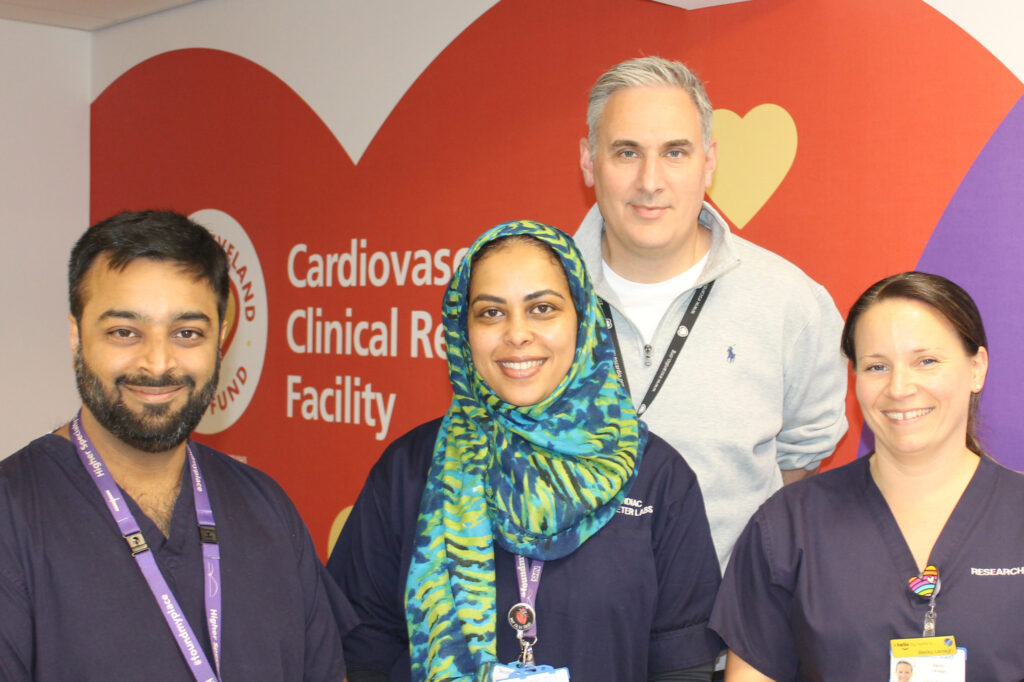
Pictured: Saif Memon, David Austin, Sahar Mohmed and Becky Lenagh in the Academic Cardiovascular Unit