A new test to detect womb cancer which is less invasive and more accurate, when compared to the current diagnostic method, has been developed by researchers.
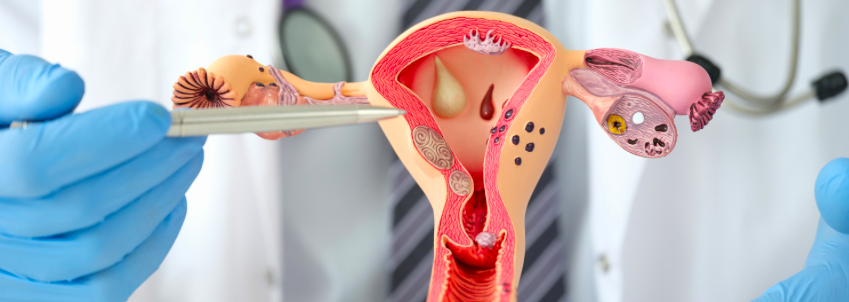
Womb cancer, also known as endometrial cancer, is the fourth most common cancer for women in the UK and is one of the main five types of gynaecological cancers (womb, ovarian, cervical, vulval and vaginal). Nevertheless, it is difficult to detect as the predominant symptom is abnormal bleeding which can be misinterpreted as other non-cancerous conditions.
Results so far suggest that the test, labelled the WID™-qEC, will detect womb cancer more accurately and will be more effective for all women, compared to existing methods.
The study
The new test was developed by Professor Martin Widschwendter, from the UCL EGA Institute of Women’s Health, and his team and it looks at three regions of DNA.
According to the UCL, the three regions of DNA “show different levels of methylation, a type of modification ‘on top’ of the DNA, in those with or without cancer”.
It added: “DNA methylation levels are measured by PCR, which is relatively low-cost and used routinely in clinical diagnostic labs, for example in the detection of coronavirus.”
The study analysed 1,288 cervical screening samples from women across the UK and Europe with and without womb cancer. It successfully found all eight cases of womb cancer.
Less than 11 per cent of women received a false positive, which is less than the usual diagnostic method of transvaginal ultrasound.
The results were reliable from swabs which had been taken by both a medical professional and a woman providing a self-collected vaginal swab. This self-sampling could quicken the detection process by limiting the time it takes, and need, for an appointment with a medical professional to take a swab.
Accurate for all women
The Women’s cancer risk IDentification – quantitative polymerase chain reaction test for Endometrial Cancer (WID™-qEC) is different from the current procedure, a transvaginal ultrasound. A small scanner probe is placed into the vagina and takes a detailed picture of the inside of the womb to look for signs of a thickened endometrium, which is then visually inspected by hysteroscopy and a biopsy will also be taken if needed.
This usual method, which is often invasive and painful, can be less dependable to detect womb cancer, particularly in black women.
Nevertheless, results so far from WID™-qEC suggest that it is a reliable test for all women, no matter their age, ethnicity, menopausal status, or stage, grade and type of cancer.
Professor Widschwendter explained: “It was critical to us that this research addressed all of the issues associated with current detection methods for womb cancer. Most importantly, using our test, far fewer women with abnormal bleeding will have to undergo invasive diagnostic procedures. Our test does not depend on the operator and results can be returned quickly, reducing anxiety.
“Post-menopausal women with abnormal bleeding have a one in 10 chance of having womb cancer; for pre-menopausal women the chance is much lower (as low as 1 in 200). For these women the simplicity and accuracy of the WID™-qEC test offers real advantages for detecting womb cancer early.
He added: “We want to thank all of the teams in the collaboration who helped to deliver this improved early detection method for womb cancer.”
The research was published in the Journal of Clinical Oncology.