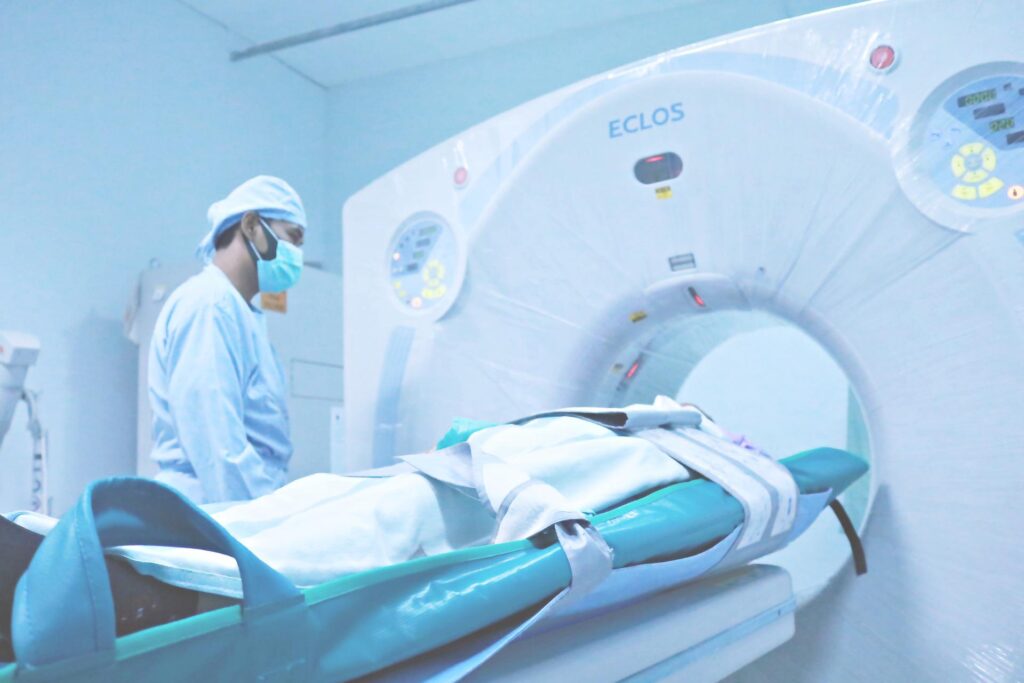
Only 30% of GPs have sufficient access ‘all of the time’ to vital scans needed to diagnose the deadliest common cancer – according to Pancreatic Cancer UK’s latest poll.
No screening programmes or early detection tests exist for pancreatic cancer, meaning CT scans are currently the only tools available to help doctors diagnose the disease in time to save lives.
The findings have been released as part of Pancreatic Cancer UK’s ‘Unite-Diagnose-Save-Lives’ campaign to fund the breakthroughs desperately needed in early diagnosis research.
The poll of 1,004 UK GPs, conducted by Savanta ComRes on behalf of Pancreatic Cancer UK, revealed inconsistent access to scans: 36% of GPs said they had sufficient access ‘some of the time’, while 20% were either ‘rarely’ or ‘never’ able to refer someone they suspected of having pancreatic cancer within the 28-day diagnostic standard.
Tragically, 80% of people with pancreatic cancer are already not being diagnosed until after the disease has spread – almost double the proportion for other cancers.
Nearly three quarters of GPs (72%) are concerned the current COVID-19 cancer diagnostic backlog may continue to prevent people with pancreatic cancer from being diagnosed in time for potentially lifesaving treatment to remove their tumour.
The major cause of late diagnosis is pancreatic cancer’s vague symptoms – such as back pain, indigestion and unexpected weight-loss – because these are also common to many less serious health conditions.
With no early detections tools to help them, it is very difficult for GPs to identify who should be urgently referred for scans to confirm or rule out the disease. Nearly half of all pancreatic cancer patients are currently diagnosed via an emergency. The impact is hugely significant; the one-year survival for patients diagnosed through a GP referral is three times higher.
Pancreatic Cancer UK is urging the public to help fund the development of the first-ever simple test for the disease and help save thousands more lives each year through its ‘Unite-Diagnose-Save-Lives’ campaign.
Thanks to this campaign, it has already invested £1.6million into its Early Diagnosis Research Alliance – an innovative project involving more than 40 leading UK scientists, which has already created a blood test that’s proven to be highly accurate in laboratory trials.
Diana Jupp, CEO of Pancreatic Cancer UK, said: “’Sorry, it’s too late. We can’t save you’ are the devastating words that 80% of people diagnosed with pancreatic cancer will hear this year, the same words the majority of patients and their loved ones have been hearing for the last 50 years. We have hardly made any progress.
“We simply cannot allow this to continue, not when we have seen the game-changing impact early diagnosis research has had for breast, prostate and other common cancers.
“We have to give doctors the innovative new tools they need to detect the warning signs earlier, so they can ensure those who need it, receive treatment as soon as possible.
“It’s an enormous challenge, but if the public stand with us, they can help deliver the first diagnostic test for the deadliest common cancer – a historic breakthrough that could save thousands of lives a year.”
To find out more about the campaign visit https://www.pancreaticcancer.org.uk/unite-diagnose-save-lives/