Patients with an advanced form of lung cancer lived 56 per cent longer without their disease progressing when radiotherapy was added to the standard of care whole-body therapy, including chemotherapy and/or immunotherapy, according to initial results from a clinical trial presented at the 2026 European Society for Medical Oncology (ESMO) Congress.
The findings from the SARON trial, funded by Cancer Research UK and sponsored by University College London (UCL), were presented by Dr Fiona McDonald, Consultant Thoracic Clinical Oncologist at The Royal Marsden NHS Foundation Trust and Leader of the Thoracic Radiotherapy Group at The Institute of Cancer Research, London, who is also Chief Investigator of the SARON trial.
For many patients with oligometastatic non-small cell lung cancer (NSCLC), a type of lung cancer which has spread to a small number of secondary sites at the time of diagnosis, the standard treatment is a whole-body, or ‘systemic’ approach, involving either chemotherapy, immunotherapy, or a combination of both. The aim of the SARON trial was to understand how additional local consolidation radiotherapy, a type of high‑dose radiotherapy delivered with the aim of controlling a cancer, to the affected areas could improve outcomes for patients.
From 19 centres across the UK, the Phase II randomised controlled trial selected 140 patients with between one and five metastases in three or fewer organs and randomised them equally, with half receiving the standard of care systemic treatment and the other half receiving local consolidation radiotherapy in addition to the standard treatment.
The latter group received high-dose radiotherapy to all known sites of disease, including the primary lung cancer, nearby lymph nodes, and secondary tumours elsewhere in the body. Depending on the size and location of the tumour being treated, this could involve stereotactic ablative radiotherapy (SBRT), a highly accurate form of radiotherapy that delivers high-dose treatment to small, well-defined tumours.
After a median follow-up period of 37.4 months, researchers observed that for patients who received radiotherapy, their cancer did not progress for an average of 13.9 months, a 56 per cent increase when compared to the average of 8.9 months experienced by those receiving the standard of care systemic treatment alone.
Researchers also discovered that the number of patients who experienced progression of the initial sites of disease within 12 months, meaning the tumour continued to grow in those areas following their treatment, was only 13 per cent for the group who received local consolidation radiotherapy, compared to 39.5 per cent of patients who received the standard of care systemic treatment alone.
In addition, the trial radiotherapy was well tolerated without any significant reduction in the quality of life that patients experienced.
When examining overall survival (OS), the length of time beginning from randomisation within the trial that a patient remained alive, the results were similar, with a median OS of 31 months for patients in the radiotherapy arm of the trial and 28 months for patients in the control (standard treatment) arm of the trial.
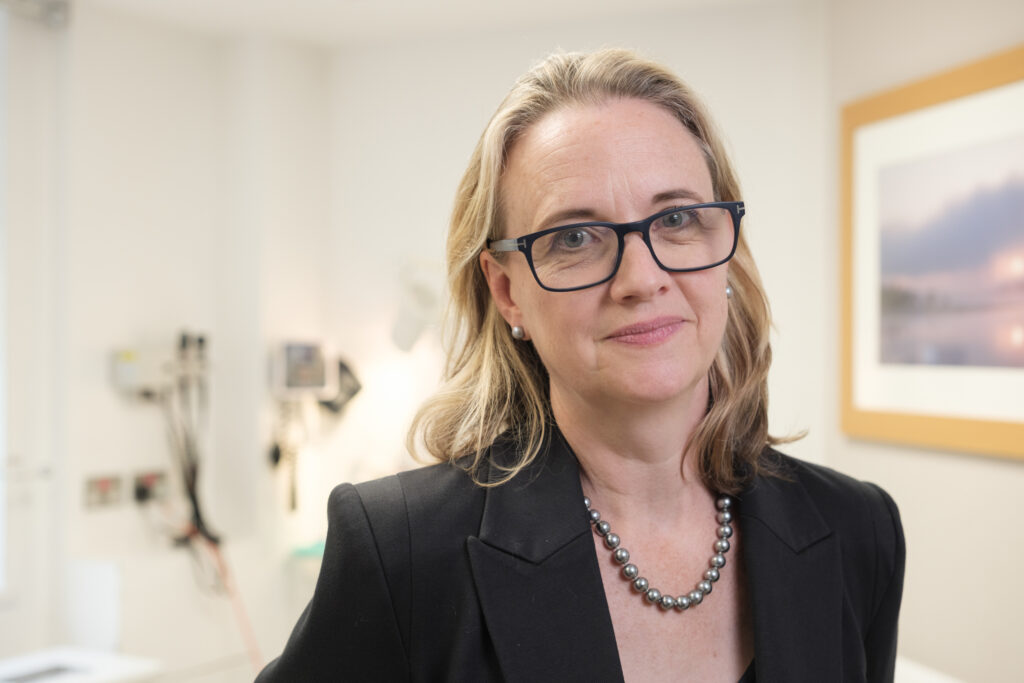
Dr Fiona McDonald (pictured), Consultant Thoracic Clinical Oncologist at The Royal Marsden NHS Foundation Trust and Leader of the Thoracic Radiotherapy Group at The Institute of Cancer Research (ICR), who is Chief Investigator of the SARON trial, said: “Until now, there has been limited randomised evidence about the benefits of adding radiotherapy to the standard of care systemic treatment for patients with oligometastatic non-small cell lung cancer (NSCLC). The SARON trial has provided important data in this context, demonstrating a significant improvement in progression-free survival without compromising quality of life. It is an exemplar of national collaboration, and these types of studies are crucial for informing personalised treatment approaches for patients.”
Julie Moran, 69, from Buckinghamshire, a former Senior Cardiac Technician, contracted COVID during lockdown in March 2020. After experiencing long COVID symptoms, she had a CT scan in September 2020 at a local hospital which led to a diagnosis of oligometastatic lung cancer. She was subsequently referred to The Royal Marsden for treatment, where she was enrolled onto the SARON trial. She said: “In a way, COVID saved my life. Without it, my symptoms might have gone under the radar. It’s strange to be diagnosed with lung cancer after working in heart and lung care for so long, because you can really see it from the patient’s perspective. Even after seeing so many ECG scans throughout my career, when I saw my own one, it was off the scale.
“The staff at The Royal Marsden were superb and they made sure I knew what my options were and exactly what to expect. After joining the trial, I received immunotherapy followed by radiotherapy. The treatment worked remarkably well and, six years later, I’m still stable. I was able to return to work and, now I’m retired, I get to spend lots more time with my grandchildren and great-grandchild.”
The SARON trial was funded by Cancer Research UK and sponsored by University College London (UCL). Cancer Research UK and UCL Cancer Trials Centre (UCL CTC) coordinate the trial and acknowledge the support and the grant funded by Cancer Research UK. The CyberKnife at The Royal Marsden, a machine which delivers SBRT to some SARON patients, was funded by The Royal Marsden Cancer Charity.