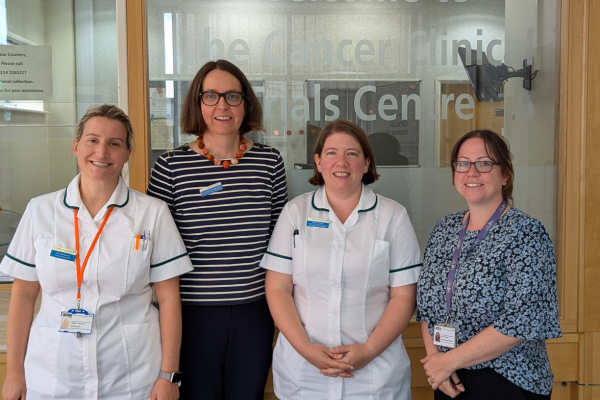
Researchers at Weston Park Cancer Centre have recruited some of the UK’s first patients into two new groundbreaking radiotherapy trials – including a UK first.
The trial, which is set to run across 25 NHS sites and involve around 840 patients, is evaluating if postoperative radiotherapy can prevent the recurrence of high-risk cutaneous squamous carcinoma, one of the most common types of skin cancer.
Nearly 1,000 patients from 45 NHS hospitals will be recruited into TOURIST, which is being managed by the Southampton Clinical Trials Unit and supported by the national Radiotherapy Quality Assurance Group with overall responsibility by The Christie NHS Foundation Trust.
Richard Hardingham, 83, from Ecclesall, the first patient in the UK enrolled into the SCC-AFTER trial at Weston Park Cancer Centre, said he volunteered to take part in the trial to give back to the NHS after receiving the “double whammy” of a skin cancer diagnosis late last year just 18 months following his prostate cancer diagnosis.
“At my age you are half-prepared for bad news sooner or later, but it was quite a numbing experience to be told I had skin cancer again and to take on board what the specialist was telling me in terms of treatment.”
In almost all cases cutaneous squamous carcinoma can be successfully treated through surgery. However, Richard was diagnosed with the higher risk form of the disease which recurs in one-third of patients. As well as making the cancer harder to treatment, recurrence reduces quality of life and causing severe symptoms such as pain, bleeding, infections, disfigurement and loss of physical function.
Currently many hospitals treat this form of the disease with post-surgery radiotherapy to destroy any remaining cancer cells. But it has not been proven that radiotherapy to the cancer site prevents the cancer from returning – and the treatment itself is not without its consequences, causing short- and long-term side effects. This includes skin inflammation and discolouration to the areas targeted with the radiotherapy.
The SCC-AFTER trial will look to determine if radiotherapy is helpful or not in reducing the chances of high-risk cutaneous squamous carcinoma returning after surgery at the original site of the disease. If it is shown to be effective, it will be recommended as a routine NHS treatment – if it not researchers will recommend it is stopped to prevent unnecessary side effects.
Since being allocated into the radiotherapy arm of the trial, there have been no signs of Richard’s skin cancer – and his prostate-antigen levels are back at normal levels too.
“I might never know the outcome of the trial, but if I don’t directly benefit then someone else will. The staff have been brilliant. If people didn’t volunteer; nothing would get done – I thought it would be churlish not to do my bit.”
Professor Jonathan Wadsley, Clinical Director for the Cancer Clinical Trials Centre at Weston Park Cancer Centre, said: “We are hugely proud to have recruited some of the UK’s first patients into these groundbreaking radiotherapy trials. This is a testament to the hard work of the whole team at the Cancer Clinical Trials Unit at Weston Park Cancer Centre. Through these trials we hope to improve the quality of cancer patients’ lives and increase the number of longer-term survivors.”
Dr Caroline Bridgewater, Consultant Clinical Oncologist at Weston Park Cancer Centre, who is leading the SCC-AFTER trial in Sheffield, said: “Although cutaneous squamous carcinoma is usually cured by surgery, it can return either in the skin where it started or in nearby lymph glands.
“This is an important trial which will provide vital evidence as to whether radiotherapy should be used post-operatively to reduce the chances of cutaneous squamous carcinoma from returning at the original site of disease. Many skin cancer patients are over 80, so the trial represents a rare – and hugely exciting – opportunity for elderly cancer patients to join cutting-edge research.”
Professor Matthew Hatton, Clinical Consultant Oncologist at Weston Park Cancer Centre and Honorary Professor of Oncology at the University of Sheffield, who is joint chief investigator of the TOURIST trial, said: “Stage IV is the most advanced form of non-small cell lung cancer and the most challenging to treat. Unfortunately, almost half of lung cancer patients are diagnosed at this stage, who often have a poor prognosis and typically a year to live. So, we really need to determine if, using modern radiotherapy techniques, we can improve outcomes for these patients. Our aim with this trial is to improve the quality of life, reduce symptoms associated with the disease and extend life expectancy.”
Patients interested in taking part in the radiotherapy trials are advised to contact their local oncologist for further information.