Researchers believe new AI software could help doctors detect lung cancer at an earlier stage and deliver more effective treatments for patients.
Lung cancer is the deadliest type of cancer. In the UK, 47,000 people are newly diagnosed each year, with over 35,000 dying from it. The low survival rate for lung cancer is because it is often detected late.
The National Institute for Health and Care Research (NIHR) is supporting the DOLCE study, which is investigating a new software programme to help analyse if spots on the lung found on CT scans are cancerous.
Researchers hope the results could save lives and help the NHS save money by avoiding unnecessary procedures. The NIHR Clinical Research Network (CRN) South London is helping recruit volunteers to the study.
The study is led by Chief Investigator Professor David Baldwin at Nottingham University Hospitals in partnership with Optellum lung AI software.
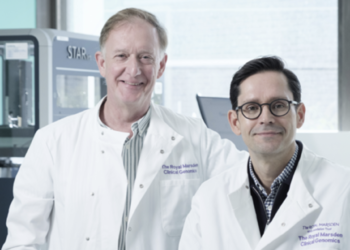
Dr Richard Lee, a Consultant Physician in Respiratory Medicine and Champion for Early Cancer Diagnosis at The Royal Marsden NHS Foundation Trust and NIHR National Specialty Lead for Screening, Prevention and Early Detection, is the study’s Local Principal Investigator.
Dr Lee said: “This technology could help us to spot cancer at an earlier stage, when treatment is likely to be more effective, by allowing us to invite people for investigation sooner.
“Often, when we find spots on the lung from a CT scan, the person will require follow-up imaging, which can take many months and can cause worry. The hope is an earlier AI decision could help to speed things up.
“A current challenge for consultants is correctly identifying lung cancer from these spots on the CT scans. An automated approach could reduce variability and provide a safety net for these decisions.
“The software offers us many opportunities, but research is critical to ensure that we make the most of these evolving technologies with the scientific proof that they are effective.”
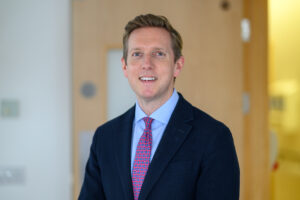
Dr Tony Leonard (pictured), from Brighton, is taking part in the DOLCE study after being invited by The Royal Marsden and The Institute of Cancer Research, London. This followed a CT scan Tony had at the Royal Brompton, where they were investigating lung problems he’s been experiencing associated with pulmonary fibrosis. Tony has agreed for his scan to be analysed as part of the research.
Tony said: “Professionally, I was a police officer and academically a social scientist. During my career, I was able to both facilitate and commission research on policing.
“This means research is really important to me, and I didn’t have any concerns about joining the study. If there’s a new technology that can help clinicians and, ultimately, patients, we ought to encourage it. I was given plenty of information about the study, including how my data would be protected.
“My mother suffered from three different types of cancer, which led to her having a radical mastectomy, a stoma fitted and problems with her lymph glands.
“I remember her emphasising that the earlier you can catch something, the more likely doctors will have a chance to make a difference. So, I understand the importance of early cancer diagnosis and innovations to improve its treatment. If I can play a part in helping to develop systems to catch the disease at an early stage, then I would be delighted.”