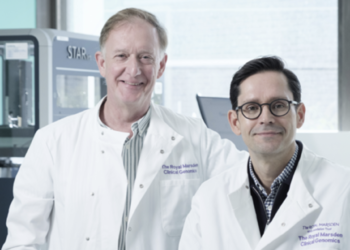
Jonathan Tobin, a partner at life science venture capital firm Brandon Capital, and Genghis Lloyd-Harris, a senior advisor at life sciences investment firm, Abingworth, have joined Cancer Research Horizons’ Ventures team as advisory investors-in-residence.
Jonathan and Genghis will also join the Investment Committee for Cancer Research Horizons’ £30m Seed Fund, set up to support the formation of new companies that offer cutting-edge cancer-beating ideas and discoveries.
Cancer Research Horizons, Cancer Research UK’s innovation engine, has access to over £400m of cutting-edge cancer research every year which it helps reach cancer patients by translating breakthroughs into new treatments, diagnostics and technologies.
But not enough of the promising new ideas and innovations cancer researchers make reach patients because there is a funding gap between academic research and taking drugs and treatments to the market.
Cancer Research Horizons’ specialist Ventures team helps bridge that gap by investing its new Seed Fund in identifying and validating breakthrough opportunities and supporting new oncology companies to form and progress to being ready for further investment.
This year alone the team has agreed to provide early-stage funding to eight new ventures.
Jonathan Tobin and Genghis Lloyd-Harris will bring a wealth of venture capital experience to the Ventures team, helping grow the number and quality of the companies the Seed Fund supports – from scouting for opportunities to scrutinising the selection process for funding and building networks of other experts to support new company development.
Tony Hickson, Chief Business Officer at Cancer Research Horizons, said, “The Ventures team is tackling the translational funding gap head-on to prevent breakthrough ideas stalling in their early phases.
“Our new investors-in-residence will have a huge impact by helping us find more opportunities, ensure their quality and advise on building scale and capabilities.
“They have deep understanding of what will make a new company likely to succeed, ultimately enabling treatments to reach patients.”