Johnson & Johnson has announced that the National Institute for Health and Care Excellence (NICE) has published Final Draft Guidance recommending DARZALEX® (daratumumab) plus bortezomib, lenalidomide and dexamethasone (D-VRd) followed by daratumumab plus lenalidomide maintenance treatment for previously untreated multiple myeloma in adults when an autologous stem cell transplant (ASCT) is suitable.1 As a result, eligible patients can soon receive D-VRd on the NHS in England and Wales as an induction therapy in advance of their ASCT, followed by D‑VRd consolidation and daratumumab plus lenalidomide maintenance after ASCT.1 In addition, NICE’s guidance states that D-VRd can be used for people who have received daratumumab plus bortezomib, thalidomide and dexamethasone induction and consolidation treatment and who have not yet started maintenance treatment, expanding the eligible pool of patents.1
“Step change” in the management of myeloma
Importantly, NICE has also recommended an innovative minimal residual disease (MRD)-guided approach to treatment.1 During maintenance, patients will undergo MRD testing using bone marrow samples, and daratumumab may be stopped after at least 24 months of maintenance treatment if MRD has remained negative for at least 12 months, while lenalidomide maintenance may continue.1 NICE recognised that using MRD status to guide treatment decisions represents a “step change” in the management of myeloma, offering eligible patients the potential to reduce treatment burden and hospital visits while maintaining disease control.1
Unmet treatment need for transplant-eligible patients with newly diagnosed multiple myeloma
Around 33,000 people in the UK are currently living with multiple myeloma, an incurable type of blood cancer.[iii] As a relapsing-remitting condition, myeloma becomes more resistant to treatment over time.1 With every relapse, each line of treatment is less effective than the last, making it vital that patients receive the most effective therapy at first-line when they are most likely to benefit.1 The disease carries a large psychological impact because of the constant possibility of relapse.1
The NICE recommendation also addresses a longstanding unmet need for a thalidomide-sparing quadruplet treatment option for transplant-eligible patients.1 NICE recognised that the use of lenalidomide in place of thalidomide is associated with a lower risk of peripheral neuropathy, representing an additional patient benefit beyond those captured in the economic modelling.1Further, the NICE committee noted that additional first-line treatment options are especially important for patients eligible for ASCT, since they tend to be younger, more likely to be working and often have caring responsibilities, meaning the disease can have a particularly detrimental impact on them and their loved ones.1
PERSEUS clinical trial data
NICE based the recommendation in its Final Draft Guidance on data from PERSEUS, a Phase 3, randomised, multicentre, open-label trial comparing the efficacy and safety of D-VRd induction and consolidation therapy followed by daratumumab plus lenalidomide maintenance treatment (D-VRd group), with bortezomib, lenalidomide and dexamethasone (VRd) induction and consolidation therapy and lenalidomide maintenance (VRd group) in patients with newly-diagnosed multiple myeloma who are eligible for an ASCT.2 The primary endpoint was progression-free survival (PFS).2 At a median follow-up of 47.5 months, the D-VRd group was found to have a statistically significant reduction in risk of disease progression or death compared to the VRd group (hazard ratio [HR], 0.42; 95% confidence interval [CI], 0.30-0.59; P <0.001).2
The safety profile of D-VRd was consistent with the known safety profiles for daratumumab and VRd in this patient population.2 Grade 3 or 4 adverse events occurred in most patients in both groups; the most common were neutropenia 62.1% with D-VRd and 51.0% with VRd) and thrombocytopenia (29.1% and 17.3%, respectively).2 Adverse events that led to treatment discontinuation were reported in 8.8% of the patients in the D-VRd group and 21.3% of those in the VRd group.2
Expert and company perspectives on NICE’s Final Draft Guidance
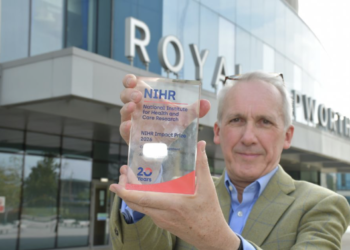
“This is fantastic news and shows that personalised treatment is absolutely the future of myeloma care,” said Scott Purdon (pictured), Head of Patient Advocacy at Myeloma UK. “D-VRd has been shown to deliver long and deep responses for myeloma. As a subcutaneous regimen, it is also more convenient and flexible than intravenous infusions and the introduction of MRD testing during maintenance treatment could mean less time spent in hospital for people with myeloma and their families compared to the previous standard of care – which is something that we know people want. We’ve worked for nearly 18 months to get this treatment made available on the NHS because we believe that people with myeloma deserve faster and fairer access to the treatments they so desperately need. Until we have a cure, it is absolutely vital that people with myeloma get the best chance to keep their cancer at bay and live well for as long as possible.”
“The substitution of lenalidomide for thalidomide will have benefit in terms of less frequent incidence of neurotoxicity and improved depth response. Secondly, access to dual agent maintenance with both daratumumab and lenalidomide will drive improvements in progression free survival, depth of response including MRD negativity and quality of life which is improved in line with duration of remission,” said Dr Ceri Bygrave, Consultant Haematologist (Cardiff & Vale), and UK Myeloma Society Advocacy Lead. “Patients, carers and clinicians working in the field of myeloma have been anxiously awaiting this decision as we work towards our shared goal of finding a long-term cure for myeloma. The UK now stands in line with leading centres in the rest of the world with access to quadruplet induction and doublet maintenance for newly diagnosed patients of all ages across the treatment pathway. This achievement would not have taken place without the support of all patients and wider stakeholders involved in this work. Thank you to them all on behalf of the UK Myeloma Society.”
“We are delighted that people with myeloma who are eligible for a stem cell transplant will now have access to daratumumab across the entire front-line treatment sequence – including maintenance, where lenalidomide monotherapy remains the current standard of care,” said Amanda Cunnington, UK Senior Director of Patient Access, Johnson & Johnson. “It is essential that people with multiple myeloma have as many treatment options available to them as early as possible, when they are fitter and most likely to benefit. I’d like to thank everybody who contributed to the appraisal process for their diligence and commitment to improving outcomes for these patients, who are central to our ambition of getting in front of, and one day eliminating, blood cancer.”
References
[1] NICE. Daratumumab with bortezomib, lenalidomide and dexamethasone for untreated multiple myeloma when an autologous stem cell transplant is suitable [ID6249]. Available at https://www.nice.org.uk/guidance/indevelopment/gid-ta11254. Last accessed September 2026.
2 Sonneveld P, et al. Daratumumab, Bortezomib, Lenalidomide, and Dexamethasone for Multiple Myeloma. N Engl J Med. 2024;390(4):301-313.
3 Myeloma UK. What is myeloma? Available at https://www.myeloma.org.uk/understanding-myeloma/what-is-myeloma. Last accessed September 2026.