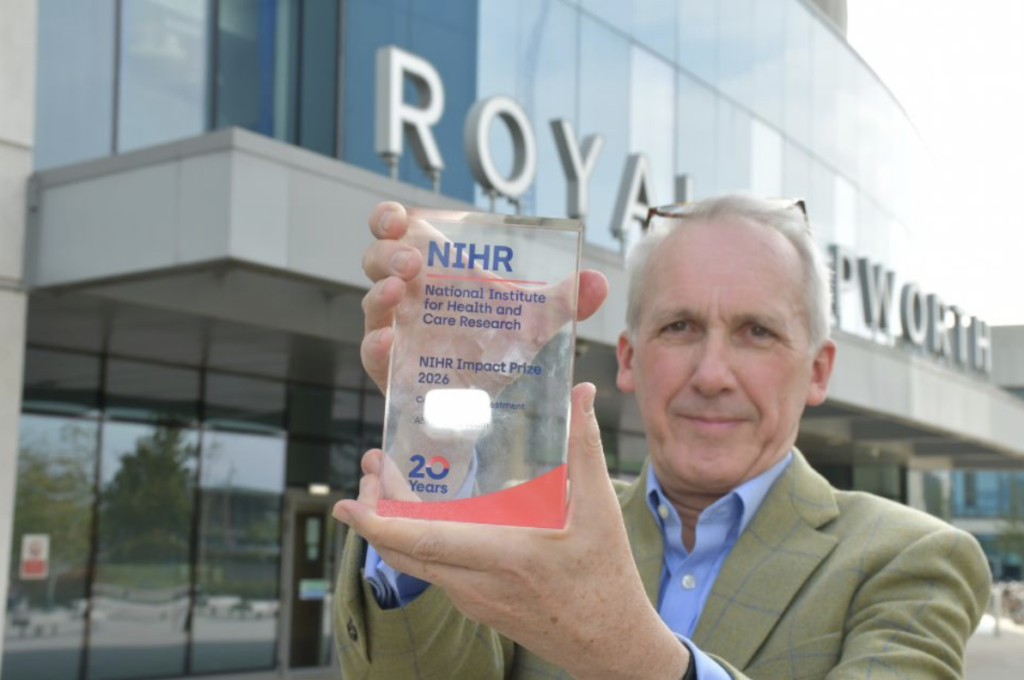
A landmark lung cancer research trial carried out at Royal Papworth Hospital NHS Foundation Trust has been given a special commendation for its scientific and economical impact.
The research explored whether ultrasound improves accuracy and cost-effectiveness of assessing the spread of lung cancer compared to surgery.
Lung cancer is the leading cause of cancer cases and most common cause of cancer death worldwide. In the UK, it kills more than 32,000 people each year.
The best chance of curing lung cancer is by removing the affected part of the lung by a surgical operation.
However, before clinicians can do that, they first have to check whether the cancer has spread to lymph glands in the centre of the chest.
Historically, this was done via an exploratory surgical operation, called a mediastinoscopy. It involved general anaesthetic, making a cut at the base of the throat to reach the lymph glands, requiring a one-to-two night stay in hospital and a full week of recovery.
The ASTER trial took place from 2007-2009 and involved 241 patients from four hospitals – Ghent, Leuven, Leiden and Cambridge.
It demonstrated that using telescope tests with ultrasound guidance to look down the airway and the oesophagus to biopsy the lymph glands was:
- more accurate than surgery (94% vs 79%) at showing whether the cancer had spread
- less invasive
- better tolerated by patients
- more cost-effective
The ultrasound approach is also performed as a day-case procedure under sedation with patients being discharged from hospital in four hours and complete recovery in 24 hours.
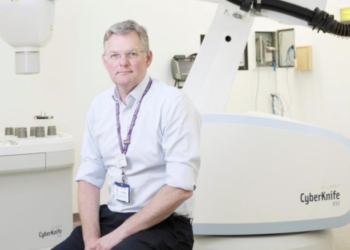
At Royal Papworth Hospital, the work was led by Professor Robert Rintoul, Consultant Chest Physician.
“As a result of this work, this endosonography ultrasound approach, as it’s called, has changed policies and clinical practice worldwide,” he said.
“It’s now the recommended first-line test in the UK and has spread to Europe, the US and Australasia.
“We’ve trained hundreds of medical and nursing staff so that now three-quarters of hospitals in England can offer this test, making it more widely available for patients, speeding up the diagnostic pathway and reducing health inequalities.
“And what’s more, these tests are cheaper too. The ultrasound approach is between £700-£1,600 less expensive per procedure. With mediastinoscopy rates having fallen from 3,100 to 800 procedures per year, that’s saving the NHS between £1.6 – £3.5 million per annum.
“Economically, the implementation of endosonography has led to increased business and sales for the manufacturers of scopes, ultrasound machines and consumables. In 2026 the global endobronchial ultrasound biopsy market is estimated at $820 million with projected growth to $1.5 billion by 2036.”
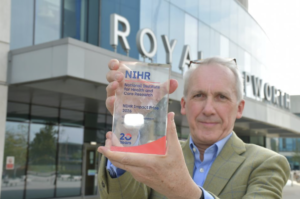
It is for this UK and global economic impact that the research has received the commended award by the NIHR as part of their 2026 Impact Prizes, recognising major improvements in health over the last 20 years, driven by research and scientific advances.
“I want to thank every single patient who took part in the trial, every single hospital who signed up and every single healthcare worker who was involved in the research,” Professor Rintoul concluded.
“Research does not happen without the involvement of many people. This award is a reflection of everyone’s contribution and hard work, so thank you.”