Johnson & Johnson is pleased that the National Institute for Health and Care Excellence (NICE) has published Final Draft Guidance recommending IMBRUVICA® (ibrutinib) in combination with rituximab, cyclophosphamide, doxorubicin, vincristine and prednisolone (R-CHOP), alternating with rituximab, dexamethasone, cytarabine and cisplatin (R-DHAP) or oxaliplatin (R-DHAOx), both without ibrutinib, followed by ibrutinib monotherapy, for adults with previously untreated mantle cell lymphoma (MCL) who are suitable for an autologous stem cell transplant (ASCT).2 This draft guidance represents a pivotal step in moving beyond transplant as the first-line standard of care for those with MCL, and means eligible patients can soon access an ibrutinib-based first-line treatment regimen on the NHS in England, Wales and Northern Ireland.2
Unmet treatment need for MCL patients
MCL is a type of non-Hodgkin lymphoma that originates from B cells,1 which are a functional component of the human immune system. The abnormal B cells usually develop in a part of the lymph nodes called the ‘mantle zone’ and typically grow quickly.1 Approximately 600 people are diagnosed in the UK each year, with the majority being diagnosed at an advanced stage.1 MCL is a relapsing-remitting condition that is generally considered incurable.1
For people who are suitable for ASCT, current treatment typically involves intensive chemo-immunotherapy followed by a transplant and maintenance therapy, which is administered in hospital over several days.2 The TRIANGLE study demonstrates ibrutinib’s potential to replace or compliment a transplant-based regimen, offering eligible patients a more effective path to long term remission and representing the first major step forward in first-line mantle cell lymphoma treatment in years.2
The NICE committee agreed that ibrutinib is expected to be significantly less resource-intensive than the current standard of care, potentially freeing up NHS capacity and reducing the logistical burden on patients.2
TRIANGLE clinical trial data
NICE’s positive FDG of ibrutinib with R-CHOP is based on data from TRIANGLE, an open-label Phase 3, randomised controlled trial.[3] It compared ibrutinib plus R-CHOP alternating with R-DHAP or R-DHAOx, both without ibrutinib, followed by ibrutinib maintenance with optional rituximab (n=268), and standard care, which was rituximab-based induction followed by high-dose therapy and ASCT consolidation, with optional rituximab maintenance (n=269).3Ibrutinib nominally significantly improved failure-free survival compared with ASCT (hazard ratio 0.64, 95% confidence interval [CI] 0.43 to 0.95, p=0.0068) and nominally significantly improved progression-free survival (hazard ratio 0.63, 95% CI 0.42 to 0.95, p=0.0060) and overall survival (hazard ratio 0.52, 95% CI 0.34 to 0.80, p=0.0023).3 The absolute number of adverse events was similar between treatment arms, but that the duration of treatment exposure was significantly longer in the ibrutinib arm.2,3 Treatment discontinuation due to adverse reactions was observed in 13% in the ibrutinib arm.2
Expert and company perspectives on the NICE recommendation
“We welcome the approval of ibrutinib in combination with chemo-immunotherapy as an important treatment option for people with mantle cell lymphoma”, said Anna Grint, Patient and Public Affairs at Lymphoma Action. “Throughout the NICE appraisal, we worked closely with people affected by mantle cell lymphoma to ensure that their experiences and priorities were heard. For many patients, the prospect of a stem cell transplant can be one of the most challenging aspects of treatment. Having access to an effective alternative that may potentially eliminate the need for a transplant means fewer side effects, a faster recovery, and less disruption to daily life. This decision represents a significant step forward and gives people affected by mantle cell lymphoma greater choice in their treatment.”
“The approval of the targeted therapy ibrutinib in combination with chemo-immunotherapy is fantastic news for patients with untreated mantle cell lymphoma as it is an effective option that prolongs survival and alleviates the toxicity associated with an autologous stem cell transplant (ASCT)”, said Dr. David Lewis, Consultant Haematologist, University Hospitals Plymouth NHS Trust. “It will also allow more outpatient-based treatment and mean less time in hospital for patients who would otherwise have had an ASCT.”
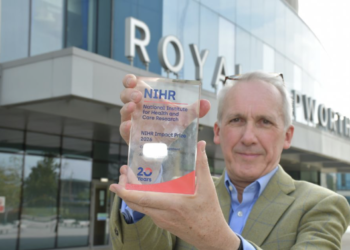
“We are delighted that NICE has recommended this ibrutinib-based regimen for eligible people living with mantle cell lymphoma,” said Amanda Cunnington (pictured), UK Senior Director, Patient Access, Johnson & Johnson. “The aggressive nature of this type of blood cancer can be devastating for patients and their loved ones, and it’s vital that they have as many transplant-free treatment options available to them as possible. At Johnson & Johnson, we remain committed to working in partnership with the NHS, healthcare professionals and the patient community to help improve outcomes for people affected by blood cancers and would like to thank everyone involved in the appraisal process for helping to bring about this important milestone.”
References
[1] Lymphoma Action. Mantle cell lymphoma. Available at https://lymphoma-action.org.uk/information-and-support/types-lymphoma/non-hodgkin-lymphoma/mantle-cell-lymphoma. Last accessed September 2026.
[2] NICE. Ibrutinib with R-CHOP for untreated mantle cell lymphoma when an autologous stem cell transplant is suitable [ID6596]. Available at https://www.nice.org.uk/guidance/indevelopment/gid-ta11802. Last accessed September 2026.
[3] Imbruvica 140mg film coated tablets. Summary of Product Characteristics. Available at https://www.medicines.org.uk/emc/product/10025/smpc. Last accessed September 2026.