A team at the University of Oxford has received support from the Medical Research Council (MRC) to develop and manufacture a new generation of personalised cancer vaccines using artificial intelligence and UK sovereign AI systems.
The programme, called the UK Cancer Vaccine AI & Supercomputing Project, brings together doctors, cancer scientists, AI experts, robotics engineers and manufacturing specialists to build AI-designed personalised cancer vaccines.
The team has been developing biological AI models using the UK’s sovereign AI systems, including the DAWN and ISAMBARD-AI supercomputers. These systems allow researchers to analyse vast amounts of cancer and immune data at a scale previously impossible within conventional university computing environments.
The MRC support will fund the next phase of the programme, including equipment needed to manufacture experimental mRNA cancer vaccines and test whether the AI’s predictions work in patient samples. The aim is to determine whether vaccine targets selected by AI can generate strong anti-cancer immune responses.
The long-term vision is a future where a patient’s tumour is analysed within secure UK sovereign infrastructure, AI identifies the best immune targets, and a personalised cancer vaccine is rapidly designed and manufactured for patients.
At the centre of the programme is CIARA, an AI Scientist platform designed to analyse tumour biology, coordinate laboratory experiments, and help researchers develop personalised cancer vaccines.
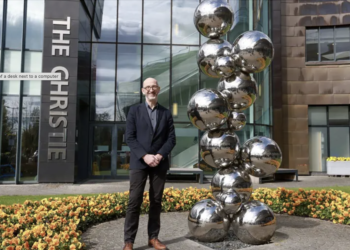
Dr Lennard Lee, project lead and Associate Professor at the University of Oxford, said: “Patients often ask whether artificial intelligence will genuinely make a difference for people with cancer. What this programme has demonstrated in a remarkably short period of time is that the United Kingdom possesses world-class sovereign AI systems. It is now possible to move much faster from AI prediction towards real-world personalised drug development.”
He added: “One day, a clinician may simply be able to say: ‘CIARA, analyse this patient’s tumour. Predict the best immune targets. Design a personalised cancer vaccine.’ We are now starting to build the systems that could make that future possible.”
The programme has grown into a consortium of more than 2,500 scientists, clinicians, technologists, patients and partners.
The initiative was referenced within the UK Government’s 10 Year Cancer Plan and highlighted within the UK government’s AI for Science Strategy.
The team is working with UK suppliers and advanced manufacturing groups to explore how future vaccine manufacturing systems could integrate with AI-driven laboratory platforms, autonomous robotics, and sovereign AI infrastructure.
The next major milestone is demonstrating that AI-designed vaccine targets can generate measurable immune responses.
The project is supported by the Medical Research Council (MRC), UK Research and Innovation (UKRI), the Advanced Research and Invention Agency (ARIA), the UK Department for Science, Innovation and Technology, and Cancer Research UK.
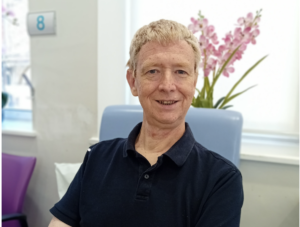
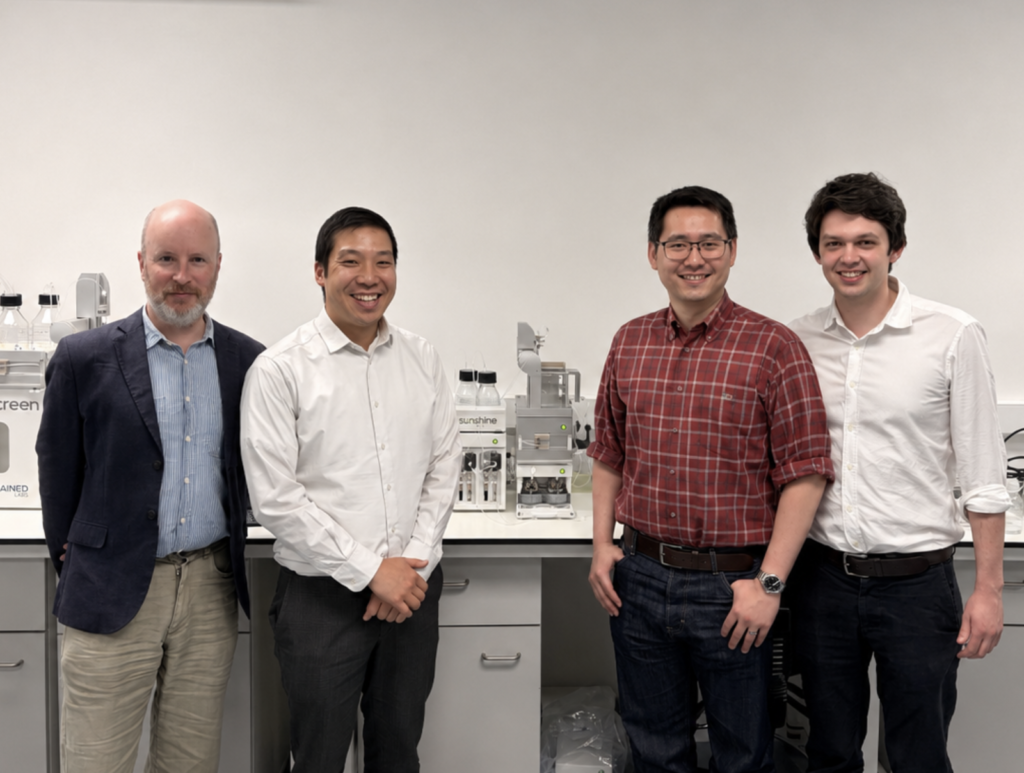
The programme involves collaborators and contributors across AI, immunology, manufacturing and robotic automation, including Dr Gareth Bloomfield, Dr Anthony Hsieh, Michael Bryan, and Dr Jedrek Jaworski.
The team are creating the scientific foundations where artificial intelligence, sovereign AI supercomputers, autonomous manufacturing and immunology are brought together to accelerate development of more precise and effective cancer medicines for cancer patients across the world.