Scientists funded by Cancer Research UK have discovered a “rising fog” that may cloud the immune system’s ability to detect tumours, potentially helping lung cancer develop years before diagnosis.
The team at University College London (UCL), led by Dr James Reading and Professor Sam Janes, were able to follow this signal using prototype blood tests and reverse it using drugs, potentially opening up new ways to intercept the disease in its early, pre-cancerous stages.
Published today in the journal Nature, the research adds to growing evidence that one day cancer could be targeted before it even develops, rather than waiting until the disease causes noticeable symptoms, and in cases of advanced cancer, be harder to treat.
There are around 32,800 lung cancer deaths in the UK every year, with only around 1 in 10 (11.1%) people diagnosed with lung cancer predicted to survive for 10 years or more. This highlights the need to understand how the disease develops, and how to stop it in its tracks.
Associate Professor at UCL, Dr James Reading, said: “We urgently need new ways to prevent lung cancer in people at high-risk of developing the disease. There was a moment when multiple members of my team were telling me that they’d spotted the same unusual regulatory T cell activity.
“What excited us most was that these cells weren’t just signalling that cancer might be developing: It was also possible to target this immune fog to intervene and stop tumours from forming, which could give us new ways to prevent lung cancer.”
The team carefully studied blood and tissue samples collected from people taking part in long-running lung cancer surveillance and screening studies, while also analysing similar processes in mice, to understand what makes precursors of lung cancer (called pre-cancers or lesions) develop into fully-fledged tumours.
They discovered regulatory T cells (Tregs), a set of specialised cells that form part of the immune system, were gradually building up months or years before cancer develops. Tregs typically hold back other cells in the immune system, pausing their activity, which could be allowing pre-cancers to slip through the cracks and develop into lung cancer unchallenged by the immune system.
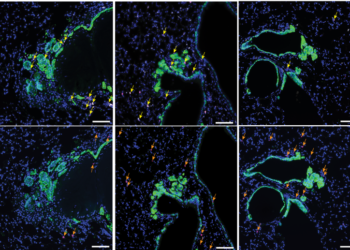
Using prototype blood tests, the team found that monitoring the levels of Tregs in the blood could help to identify people at increasing risk of lung cancer or patients with a very early form of the disease. It also explored using targeted cancer drugs to reverse and disperse the Treg “fog” and found that a drug targeting specific immune processes could reverse the Treg’s immune-suppressing effect, halving the proportion of animals that developed lung tumours in laboratory experiments, and preventing formation of all large tumours.
Interim Dean of the Faculty of Population Health Sciences at UCL, Professor Sam Janes, said: “We’re moving from largely treating cancer when it develops towards tackling the pre-cancerous disease. This is called cancer interception, an exciting and emerging area of research which we hope will stop some pre-cancers from ever becoming cancers in the first place.”
The work was funded by Cancer Research UK and UK Research and Innovation’s Medical Research Council (UKRI MRC), with additional support from the National Institute for Health and Care Research and other funding partners.
The paper is titled “A preinvasive regulatory T cell axis for lung cancer interception”
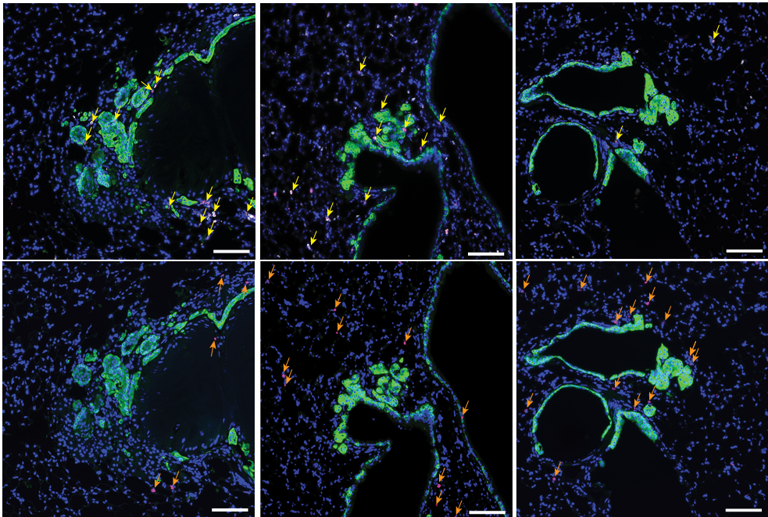
Image: Reduced number of Tregs following treatment with PI3K-targetted drug with additional cells