Sanofi is pleased to announce that the United Kingdom (UK) Medicines and Healthcare products Regulatory agency (MHRA) has granted marketing authorisation for Sarclisa (isatuximab) for subcutaneous (SC) use in combination with standard-of-care regimens for the treatment of patients with multiple myeloma (MM) across all existing indications approved for the intravenous (IV) formulation. Isatuximab is the first anticancer therapy in the UK that will provide the option of administration through an on-body injector (OBI) or standard manual SC injection, providing the potential flexibility of administration at patients’ homes and in the outpatient setting.
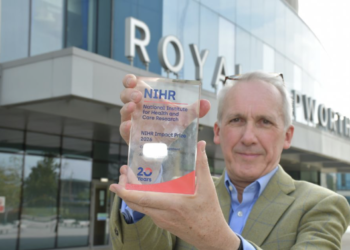
“Multiple myeloma is a complex disease that often requires repeated and prolonged clinic visits, placing a considerable burden on patients and those who support them. There has been a need for innovative approaches to ease this aspect of the treatment journey,” said Karthik Ramasamy, MD, PhD, Professor of Haematology and Consultant Haematologist (pictured) at Oxford University Hospital NHS Trust and Clinical Director of the Oxford Translational Myeloma Centre, University of Oxford. ”The ability to administer a therapy through an on-body injector, particularly an anti-cancer drug, either in the clinic or eventually at a patient’s home represents a meaningful step forward. With this option now approved, we have an opportunity to potentially reduce pressure on the NHS while placing greater flexibility and convenience at the heart of patient-centred care. This approach directly aligns with the NHS Ten Year Plan and National Cancer Plan to transform the healthcare system through technology and leveraging innovation.”
The approval of Isatuximab SC, which follows a positive opinion from the European Medicines Agency’s Committee for Medicinal Products for Human Use, is based on the results from the pivotal IRAKLIA phase 3 study in relapsed/refractory (R/R) MM (NCT05405166), which demonstrated non-inferiority of the SC formulation compared to IV, as well as additional studies.
John Forni, Country Medical Lead, Sanofi UKIE: “This MHRA approval marks a pivotal moment for patients living with multiple myeloma in the UK. For the first time anywhere in the world, an anticancer therapy can be delivered through an on-body injector, and the UK is leading that charge.
“What excites me most is the real-world potential, an automated 13-minute median duration injection that can be administered at home or in the clinic, with favourable patient comfort and satisfaction. This is what patient-centred innovation looks like in practice. We are proud that the UK is the first country in the world to launch the CirCLIQ® OBI.”
In the IRAKLIA study, the first phase 3 study to incorporate the use of an OBI in the treatment of MM, isatuximab SC was administered via the OBI (n=263 patients), in combination with pomalidomide and dexamethasone (Pd) and resulted in a 71.1% objective response rate (ORR), compared to 70.5% with isatuximab IV-Pd (n=268 patients), meeting the required non-inferiority (risk ratio [RR]: 1.008; 95% confidence interval [CI]: 0.903-1.126; p=0.0006), in adult patients with R/R MM who have received at least one prior line of treatment.
The overall safety profile of isatuximab SC-Pd (n=263 patients) observed in this study was consistent with that of the IV-Pd arm (n=264 patients). While 25% of patients treated with isatuximab IV experienced systemic infusion reactions, comparatively 1.5% of patients treated with the SC formulation experienced those reactions. Low-grade local injection site reactions (ISRs) occurred in 0.4% of OBI injections (n=19/5,145 injections). Nearly all ISRs were grade 1, except for one episode of grade 2.
The IRAKLIA and IZALCO studies captured healthcare professional (HCP) and patient satisfaction data of the OBI, compared to IV and manual SC administration treatment arms. In the IRAKLIA phase 3 study, 70% of patients treated via the OBI (n=263 patients) reported being satisfied or very satisfied with their injection compared to 53.4% patients receiving IV (n=268 patients) (OR 2.036; 95% CI: 1.425-2.908; p=0.0001). The median OBI injection duration was 13 minutes, and 97.9% of injections were completed in ≤20 minutes. In the IZALCO phase 2 study, after experiencing both administration methods (n=47 patients), 74.5% of patients preferred SC injection via an OBI over manual injection, compared with only 17% who preferred manual injection and 8.5% with no preference (p=0.0004; binomial test against the null hypothesis of ≤50% rate), reinforcing patient preference for simplified, hands-free administration.
Isatuximab SC will be available to be used in conjunction with Enable Injections’ CirCLIQ® OBI, an automated injector developed using the enFuse® platform, designed to subcutaneously deliver the drug with the push of a button in either outpatient or home settings. The CirCLIQ® OBI uses a short, thin and hidden retractable needle to deliver isatuximab SC.
The most common grade ≥3 nonhematologic adverse events (AEs) were pneumonia (14.8% OBI, 15.5% IV), COVID-19 (2.7%, 1.9%), and upper respiratory tract infection (1.5% both arms). The most common grade ≥3 hematologic laboratory abnormalities were neutropenia (84.7% OBI, 74.3% IV), thrombocytopenia (26.1%, 23%) and anemia (17.6%, 19.5%).
In patients from countries where at-home administration was permissible, median injection duration of isatuximab SC via the OBI was the same between clinic and at-home administration (13 minutes). Home administration was generally well tolerated with no additional safety signals and all injections were completed.
About the IRAKLIA study
IRAKLIA (clinical study identifier: NCT05405166) was a randomized, open-label, pivotal phase 3 study in a total of 531 patients evaluating the non-inferiority of isatuximab SC administered at a fixed dose via an OBI versus weight-based dosed isatuximab IV in combination with Pd in adult patients with R/R MM who have received at least one prior line of therapy. The co-primary endpoints assessed were ORR, defined as the proportion of patients with stringent complete response (CR), CR, very good partial response, and partial response according to the 2016 International Myeloma Working Group criteria assessed by Independent Review Committee (IRC), and observed mean concentration of drug before dosing (Ctrough) at steady state (pre-dose at cycle 6, dose 1 [C6D1]), defined as observed isatuximab SC plasma concentrations. Key secondary objectives included safety and IR rate, and patient satisfaction on the administration method using the patient experience and satisfaction questionnaire (PESQ), as well as other standard myeloma efficacy endpoints.
About the IZALCO study
IZALCO (clinical study identifier: NCT05704049) was a two-part randomized, open-label phase 2 study in a total of 74 patients evaluating the efficacy and safety of isatuximab SC administered via an OBI or by manual push, in combination with carfilzomib and dexamethasone (Kd), for the treatment of patients with R/R MM who have received one to three prior lines of therapy. The primary objective was ORR, as assessed by IRC. The secondary objectives were patient and healthcare provider preference for the OBI versus manual SC administration.
About Enable Injections
Cincinnati-based Enable Injections is a global healthcare company committed to improving the patient treatment experience through the development and manufacturing of the enFuse® On-Body Delivery System. An innovative wearable technology, the enFuse system is designed to deliver large volumes of pharmaceutical and biologic therapeutics via subcutaneous administration, with the aim of improving convenience, supporting patient outcomes, and advancing healthcare system economics. For more information, visit: https://enableinjections.com/.
About isatuximab
Isatuximab is a CD38 monoclonal antibody that binds to a specific epitope on the CD38 receptor on MM cells, inducing distinct antitumor activity. It is designed to work through multiple mechanisms of action including programmed tumor cell death (apoptosis) and immunomodulatory activity. CD38 is highly and uniformly expressed on the surface of MM cells, making it a target for antibody-based therapeutics such as isatuximab.
For more information on Isatuximab clinical studies, please visit www.clinicaltrials.gov.
MAT-XU-2602270 V1.0 June 2026